Learn why management accounts are important for UAE companies, including cash flow planning, VAT filing, corporate tax preparation, audit readiness, and better financial decisions.
Many companies only look closely at their accounts when a deadline is approaching. VAT return due? The records are checked. Audit submission coming up? The finance file is cleaned. Is corporate tax filing getting closer? The numbers are reviewed again.
That approach may help with basic compliance, but it does not give management enough visibility to run the business with confidence.
A company can have money coming in and still be losing control of its margins. It can show profit on paper and still struggle with cash flow. It can submit VAT returns on time and still have differences between its accounting records and tax filings. It can complete an audit and still discover later that the records are not strong enough for corporate tax review.
This is where management accounts become important.
Management accounts give owners, directors, and finance teams a clearer picture of what is happening inside the business before deadlines, cash flow pressure, or tax issues force a review. Instead of waiting until the year ends, management can see how the company is performing during the year and make better decisions while there is still time to act.
What Are Management Accounts?
Management accounts are internal financial reports prepared to help management understand performance, cash flow, expenses, profit margins, and key financial movements. They are not the same as annual audited financial statements.
Audited financial statements are usually prepared after the financial year ends and are often required for shareholders, banks, free zone authorities, regulators, or tax purposes. Management accounts are prepared more regularly, usually monthly or quarterly, and are designed for internal review.
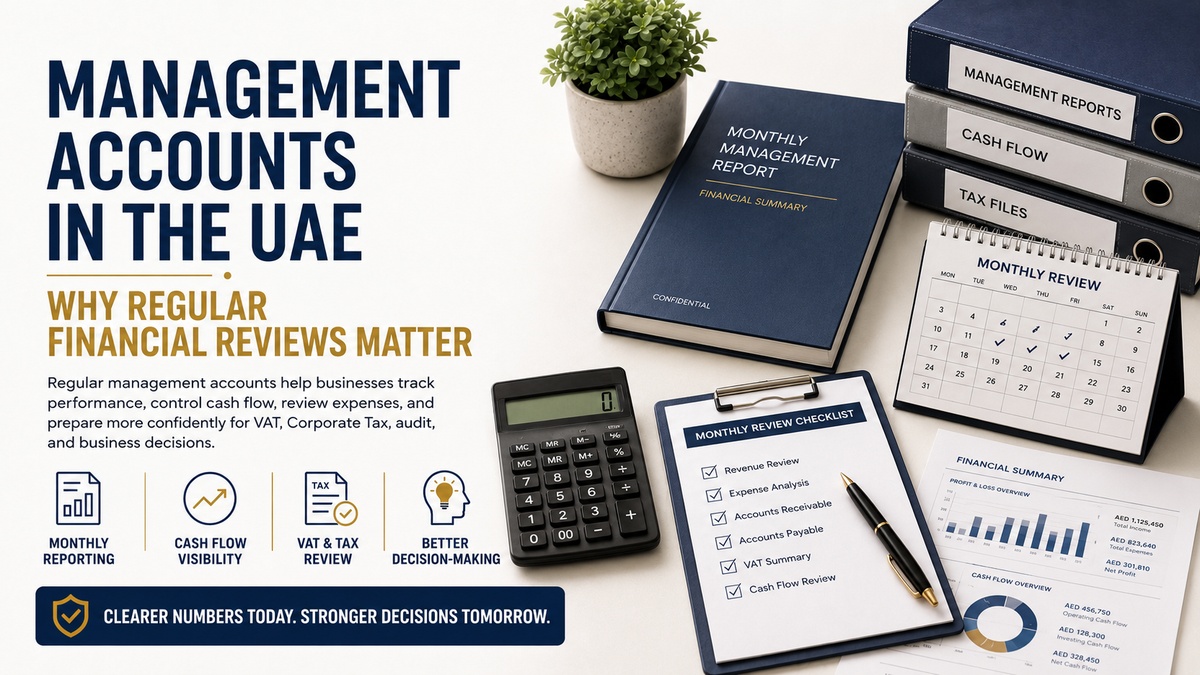
A proper management accounts pack may include a profit and loss statement, balance sheet, cash flow summary, bank reconciliation status, receivables and payables aging, VAT summary, expense analysis, shareholder or related party balances, and commentary on major changes in the numbers.
The value is not just in producing reports. The real value is in understanding what the reports are saying.
Management Accounts vs Annual Financial Statements
Annual financial statements show what happened over a completed financial year. Management accounts help show what is happening now.
That difference matters. By the time annual accounts are prepared, certain problems may already be old. Missing invoices may be harder to recover. Unreconciled transactions may take longer to explain. Customer balances may have been outstanding for months. VAT differences may have carried across multiple filing periods.
Management accounts create a regular review process, which gives management a chance to identify issues earlier.
Area | Management Accounts | Annual Financial Statements |
|---|---|---|
Main purpose | Internal review, decision-making, and financial control | Year-end reporting, audit and compliance |
Timing | Monthly, quarterly or as needed | Usually annually |
Main users | Owners, management, finance team and advisors | Shareholders, auditors, banks, authorities and external stakeholders |
Focus | Current performance, cash flow, issues and action points | Final financial position and yearly performance |
Practical value | Helps management act before problems build up | Supports formal reporting and external requirements |
Both types of reports are useful, but they serve different purposes. A company that only prepares year-end accounts may still struggle during the year because management does not have timely information.
Why Management Accounts Matter in the UAE
The UAE compliance environment has changed significantly. Accounting records are now closely linked to VAT, corporate tax, audit requirements, banking relationships, license renewals, and financial planning.
This means the quality of the accounts affects more than internal bookkeeping. Weak records can delay audit work, create VAT filing issues, complicate corporate tax preparation, affect bank reviews, and make it harder for management to understand the financial position of the company.
Regular management accounts help prevent that. They bring structure into the finance process and reduce the need for last-minute clean-up before every deadline.
1. They Show the Real Profit Position
Revenue alone does not show whether a company is performing well.
A business may be generating strong sales but still have weak profit because costs are rising, pricing is too low, customers are paying late or certain services are not performing as expected. Looking only at the bank balance can also be misleading because cash available today may already be needed for supplier payments, salaries, VAT liabilities, or other obligations.
Management accounts help separate activity from actual performance. A proper review can show whether margins are improving or declining, which expenses are increasing, whether the business is relying too much on one customer, and whether the company is earning enough to support its operating costs.
This kind of visibility is important before making decisions such as hiring, expanding, increasing marketing spend, buying equipment, or taking on larger projects.
2. They Make VAT Filing More Organised
VAT filing becomes much easier when the records are already clean before the return is due.
A rushed VAT review often leads to missing invoices, unmatched credit notes, unclear expense classifications, incorrect input VAT claims, or differences between sales records and VAT figures. These issues may not always be major, but they take time to resolve and can create unnecessary pressure close to the deadline.
Management accounts allow the finance team to review VAT-related records as part of the regular reporting cycle. Sales, purchases, credit notes, tax invoices, and VAT balances can be checked before the filing period closes.
This gives the company more control over its VAT position and reduces the risk of treating VAT as a last-minute task.
3. They Support Corporate Tax Preparation
Corporate tax has made accurate accounting records even more important in the UAE.
The corporate tax return does not start from a blank page. It starts with the company’s accounting profit, then considers the relevant tax adjustments, deductions, exemptions, and classifications.
When the accounts are not reviewed properly during the year, tax preparation becomes harder. Old transactions may need to be revisited. Expense categories may need to be corrected. Owner withdrawals, related party balances, finance costs, provisions, and non-deductible expenses may need closer review.
Management accounts help reduce that pressure because the numbers are checked before the corporate tax deadline is near. By the time tax filing begins, the company should already have a clearer view of its revenue, expenses, profit position, and areas that may require tax treatment.
This is especially useful where there are multiple income streams, shareholder transactions, group company balances, free zone considerations, or mixed-use expenses.
4. They Improve Audit Readiness
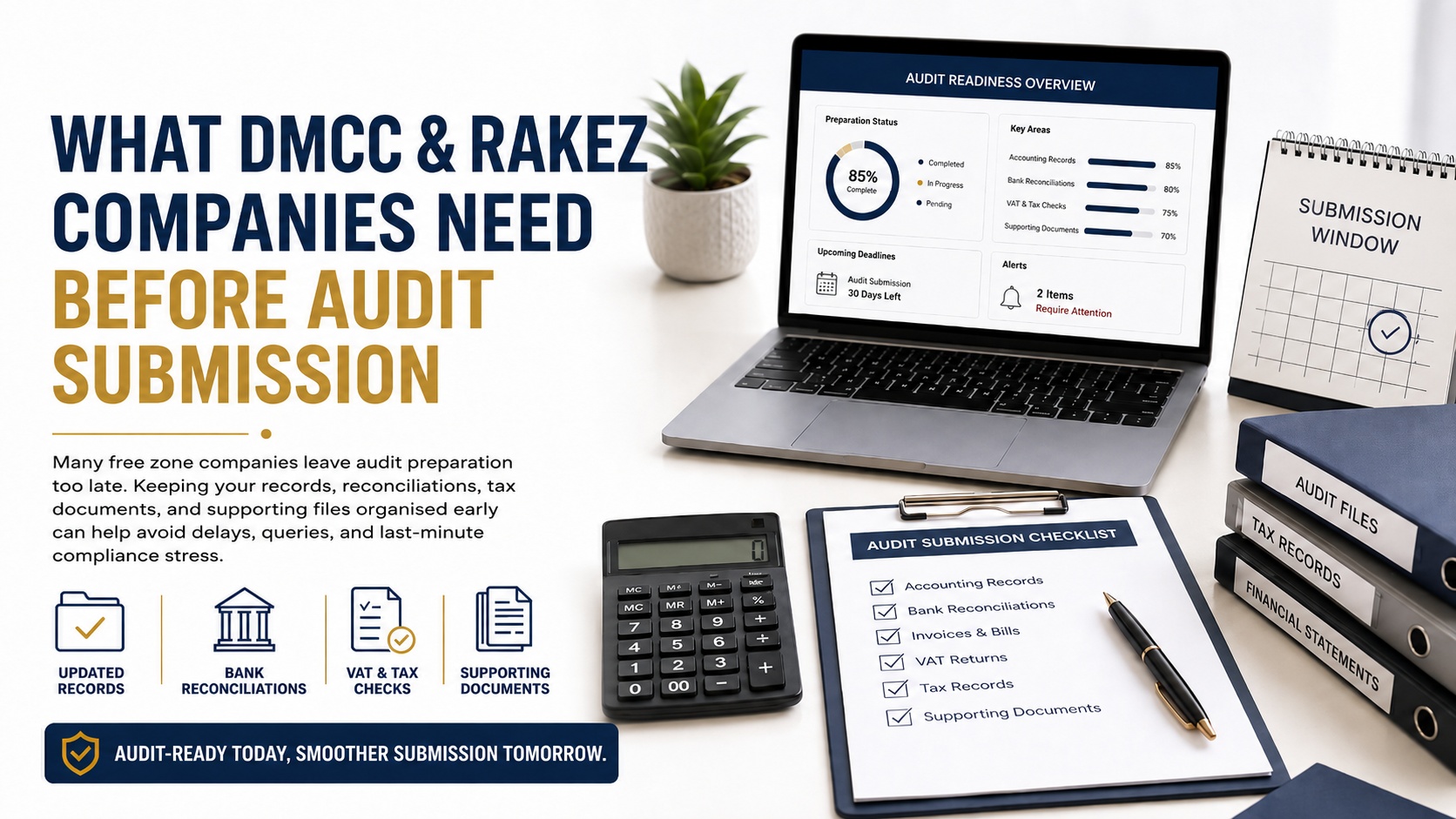
Audit work becomes more difficult when records are only reviewed after the financial year ends. Auditors usually request ledgers, bank statements, invoices, supplier balances, customer balances, fixed asset schedules, payroll records, agreements, and supporting documents for major transactions. If these items are not maintained properly during the year, the audit process can slow down.
A regular management accounts review helps keep the file cleaner. Bank reconciliations are updated more often. Receivables and payables are reviewed before they become outdated. Major expenses are easier to explain because the transactions are still recent. Supporting documents are easier to locate.
The audit may still require detailed review, but the process becomes smoother when the underlying records are already organized.
5. They Give Better Control Over Cash Flow
Profit and cash flow are not the same thing. A company may be profitable on paper but still face cash pressure if customers are paying late, supplier bills are due, salaries are approaching, or VAT and tax payments have not been planned for properly.
Management accounts help show the timing of money, not just the total income and expenses. A receivables aging report can highlight overdue customer invoices. A payables report can show upcoming supplier obligations. A cash flow summary can help management understand whether the company has enough funds for the next month or quarter.
This gives management time to act. Payment follow-ups can be prioritized, supplier payments can be planned, spending can be reviewed, and cash gaps can be addressed earlier.
Without that visibility, cash flow problems often appear suddenly, even when the company looks profitable in the accounts.
6. They Help Identify Problems Earlier
Many accounting issues become stressful because they are discovered too late. A missing supplier invoice is easier to request one month later than one year later. An unexplained bank transaction is easier to confirm while the details are still fresh. A customer balance is easier to follow up on while the relationship is active. A VAT mismatch is easier to correct before several returns have already been filed.
Management accounts create a habit of regular review. This helps identify duplicate entries, missing documents, unusual expenses, incorrect classifications, unreconciled bank movements, overdue receivables, and unexpected changes in profit margins.
Small issues are easier to fix when they are still recent. Left until year-end, they can delay audits, complicate tax filing, and create avoidable stress for the finance team.
7. They Support Better Business Decisions
Every major decision has a financial impact. Before hiring new staff, increasing marketing spend, opening another location, purchasing equipment, applying for finance or changing prices, management should understand the company’s financial position.
Management accounts provide that context. They show whether the business has enough cash, whether profit margins can support the decision, whether costs are already too high, and whether recent performance supports the next step.
This is especially important during growth. Growth can look positive from the outside, but it often brings higher costs, larger receivables, more staff obligations, and increased compliance responsibilities.
Clear financial reporting helps management grow with more control, instead of reacting after pressure has already built up.
What Should Be Included in a Management Accounts Pack?
The right reporting format depends on the size, activity, and structure of the company. A consultancy may not need the same reporting detail as a trading company, construction business, retail operation, or group of companies.
However, a useful management accounts pack usually includes:
Report or Review Area | Why It Matters |
Profit and loss statement | Shows revenue, costs, expenses and profit movement |
Balance sheet | Shows assets, liabilities, equity and key balances |
Bank reconciliation | Confirms whether bank records match accounting entries |
Receivables ageing | Highlights overdue customer payments and collection risk |
Payables ageing | Shows supplier obligations and upcoming payment pressure |
VAT summary | Helps review VAT position before filing |
Expense analysis | Identifies cost increases, unusual spending or misclassification |
Cash flow summary | Helps management plan upcoming payments and liquidity |
Related party and shareholder balances | Supports cleaner tax and audit review |
Management commentary | Explains what changed, what needs attention and what action should be taken |
The commentary is important. Numbers alone do not always tell management what to do next. A strong report should explain the movement, highlight risks, and suggest areas that need action.
How Often Should Management Accounts Be Prepared?
Monthly reporting is usually the most practical rhythm because it gives management enough time to review performance and act before issues become bigger.
Quarterly reporting may be enough for smaller companies with simple transactions, but the review still needs to be consistent. The aim is to avoid waiting until a filing deadline or audit request before looking at the accounts properly.
Management accounts should also be prepared before major decisions, such as expansion, financing, shareholder changes, large purchases, restructuring, or entering a new market.
The timing should match the level of activity in the company. The more transactions, obligations, and decision points there are, the more valuable regular reporting becomes.
Common Mistakes to Avoid
One common mistake is preparing management accounts but not reviewing them properly. Reports only add value when management uses them to understand performance and take action.
Another mistake is focusing only on profit while ignoring cash flow, receivables, payables, VAT balances, and balance sheet movements. A company can look profitable and still have serious collection issues, unpaid supplier obligations, or unclear shareholder balances.
Delayed reporting is another problem. If reports are prepared months after the period ends, the information becomes less useful. Management accounts should be timely enough to support decisions while the numbers are still relevant.
Incomplete bookkeeping also weakens the quality of the reports. Missing invoices, unreconciled bank entries, and unclear transaction descriptions make it harder to trust the numbers.
When Professional Support Becomes Necessary
Professional accounting support becomes useful when management cannot clearly answer basic financial questions.
Is the company profitable this month?
Are customers paying on time?
How much VAT is expected?
Are expenses increasing?
Are bank reconciliations up to date?
Are the records ready for audit or corporate tax filing?
If these answers are unclear, the company may need stronger bookkeeping and reporting support.
An experienced accounting team can help organize records, prepare management accounts, review financial movements, highlight risks, and keep the company better prepared for tax, audit, and management decisions.
Final Thoughts
Management accounts are not only for large companies. They are a practical tool for improving financial control, cash flow planning, VAT review, corporate tax preparation, and audit readiness.
When financial reports are reviewed regularly, management can identify problems earlier, make better decisions, and reduce year-end pressure. Instead of rushing to clean records before every deadline, the company works from a more organized financial position throughout the year.
In the UAE, where accounting records now connect closely with tax, audit, banking, and compliance requirements, regular financial review is becoming harder to ignore.