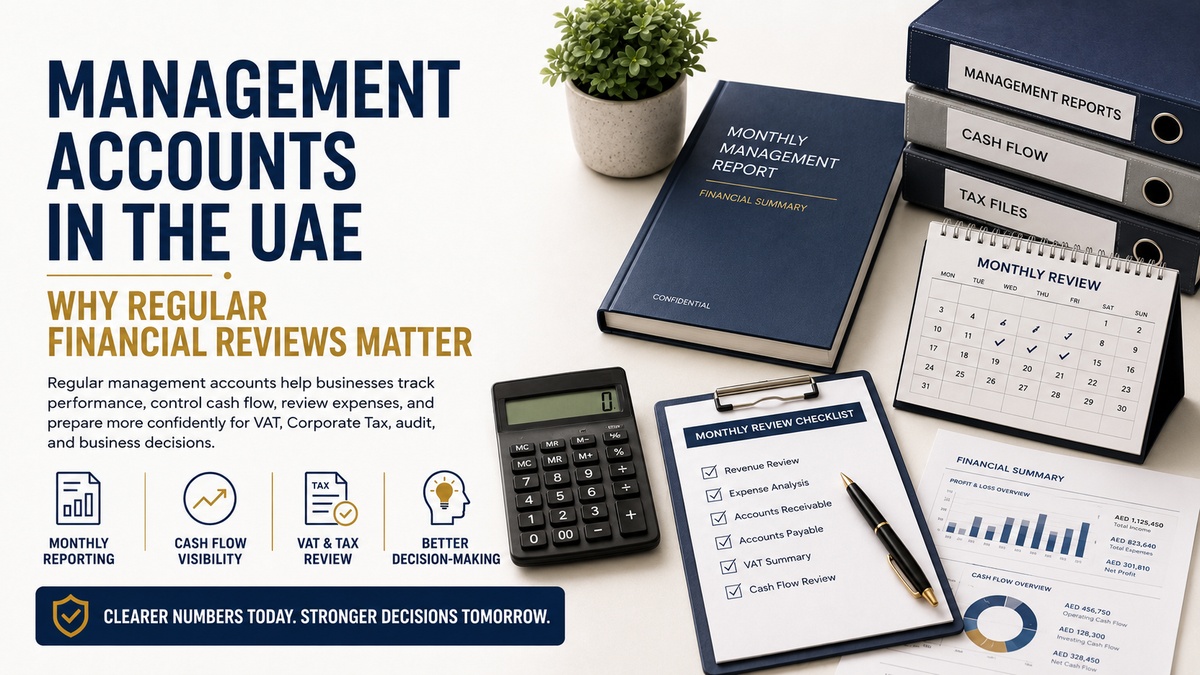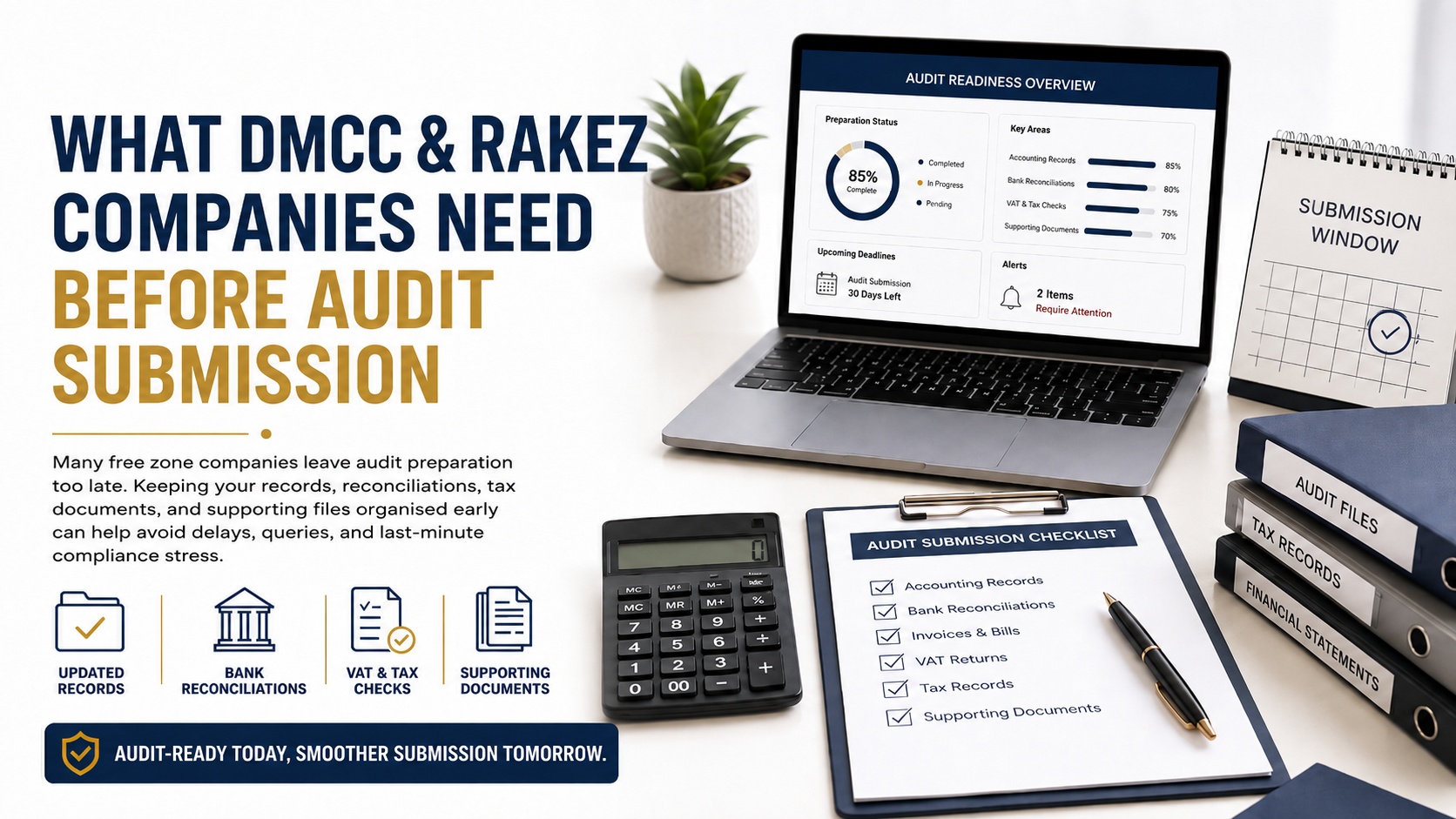
Use this month-end accounting checklist to review bank reconciliation, VAT records, payroll, receivables, payables, expenses, and Corporate Tax readiness.
A strong month-end accounting process helps a business understand where it stands before the next month begins. It gives business owners clearer visibility on cash flow, expenses, receivables, payables, VAT, payroll, and overall financial performance. For companies operating in the UAE, month-end accounting is also important for compliance. VAT filing, corporate tax preparation, audit support, bank requirements, and internal reporting all depend on the quality of the records maintained during the year.
When accounts are only reviewed at year-end, small issues can become larger problems. Missing invoices, unreconciled bank transactions, unrecorded expenses, and unclear customer balances can delay reporting and create unnecessary pressure close to filing deadlines.
A proper month-end checklist helps prevent that. It gives the business a simple structure for reviewing records, correcting errors, and making sure the numbers are reliable before the next reporting period begins.
Why month-end accounting matters
Month-end accounting is not just an internal finance routine. It is one of the most useful habits a business can build.
When the books are reviewed every month, management can see whether revenue is growing, whether expenses are under control, whether customers are paying on time, and whether the company has enough cash to meet upcoming obligations.
It also makes compliance easier. VAT records can be checked before filing, corporate tax records are easier to maintain, and financial statements can be prepared with fewer corrections at year-end.
A business that understands its numbers every month is in a better position to plan, make decisions, and respond to financial questions with confidence.
1. Reconcile bank accounts
Bank reconciliation should be one of the first tasks in the month-end accounting process. It confirms whether the transactions recorded in the accounting system match the transactions shown in the bank statements.
Unreconciled bank accounts can hide missing sales, duplicated payments, supplier payments without invoices, unrecorded bank charges, or transfers that were posted incorrectly.
A clean reconciliation helps the business confirm that its cash position is accurate. It also improves the reliability of financial statements, VAT reports, and management accounts.
Any unexplained difference should be investigated while the transaction is still recent. Waiting several months makes it harder to remember what happened and why.
2. Review sales invoices and revenue
Revenue should be reviewed carefully at the end of each month. The accounting team should check whether all sales invoices have been issued, recorded, and matched with customer payments where applicable.
This is especially important for businesses with project-based billing, recurring services, multiple payment channels, or manual invoicing processes.
The review should also include cancelled invoices, discounts, refunds, and credit notes. These adjustments can affect revenue, VAT reporting, customer balances, and cash flow planning.
A reliable revenue review helps the business understand its actual performance, not just the amount received in the bank.
3. Check supplier invoices and expenses
Supplier invoices and expenses should be recorded in the correct month and supported by proper documents.
A payment in the bank statement is not enough on its own. The business should also have a supplier invoice, receipt, contract, or approved expense claim that explains what the payment relates to.
This step helps prevent missing expenses, duplicated bills, vague expense categories, and unsupported claims. It also gives management a better understanding of where money is being spent.
For VAT-registered businesses, supplier invoice review is especially important because input VAT claims should be supported by valid tax documents.
4. Separate business and personal transactions
Owner-managed businesses often run into accounting issues when personal and business transactions are mixed. This can happen when owners use the company card for personal costs or pay business expenses from a personal account.
These transactions should be identified and recorded properly during month-end review. Personal payments should not be left inside general business expense categories, and owner-funded business expenses should be supported with clear documentation.
Clean separation makes the accounts easier to review. It also reduces confusion during VAT filing, corporate tax preparation, and financial statement review.
5. Review accounts receivable
Accounts receivable shows the amount customers still owe the business. A monthly review helps management understand which invoices are unpaid, which customers are delaying payment, and whether any balances need follow-up.
This review should not be limited to the total receivables figure. The business should look at aging reports to see how long invoices have been outstanding.
Old unpaid balances can affect cash flow and may indicate collection issues. They can also make financial statements less useful if no one is reviewing whether those amounts are still recoverable.
A simple monthly follow-up process can improve collections and reduce the risk of unpaid invoices being forgotten.
6. Review accounts payable
Accounts payable shows what the business owes to suppliers, landlords, service providers, lenders, and other parties.
A monthly payables review helps the company plan cash outflows and avoid missed payment obligations. It can also identify duplicate supplier bills, invoices recorded in the wrong period, or payments that were made but not matched correctly.
This is useful for cash flow planning because a business may have money in the bank but still have supplier payments, payroll costs, VAT obligations, loan installments, or rent payments due soon.
Month-end review gives the business a clearer view of what needs to be paid and when.
7. Check VAT records
VAT should be reviewed during the month-end process, not only when the VAT return is due.
The business should check output VAT, input VAT, tax invoices, credit notes, reverse charge entries where applicable, and the VAT balance in the accounting system.
This review helps identify missing tax invoices, incorrect VAT treatment, unsupported input VAT claims, or differences between accounting records and VAT reports.
Regular VAT review makes filing easier because the business is not trying to correct several months of issues at once. It also gives management a better view of whether VAT payable or refundable amounts need to be planned for in cash flow.
8. Review payroll and staff-related costs
Payroll should be checked every month to confirm that salaries, allowances, reimbursements, commissions, benefits, and staff-related expenses have been recorded correctly. For companies that process salary payments through WPS, payroll records should also align with salary payment records and employee documentation. Staff advances, reimbursements, visa costs, medical insurance, and end-of-service provisions should not be mixed into general expenses without proper classification.
Accurate payroll records support financial reporting, cash flow planning, compliance review, and future audit preparation.
9. Check petty cash, reimbursements, and company cards
Petty cash, staff reimbursements, and company card expenses can easily become messy if they are not reviewed regularly.
Each expense should have a clear business purpose, proper approval, and supporting documentation. Receipts should be collected on time, and any missing documents should be requested before the month is closed.
This review helps prevent unsupported expenses from building up quietly. It also makes the accounts more reliable because smaller transactions are often where many record-keeping gaps appear.
A simple monthly process for receipts and reimbursements can save a lot of time during VAT filing and year-end accounting.
10. Review fixed assets and major purchases
Major purchases should be reviewed to confirm whether they have been recorded correctly. Some items may need to be treated as fixed assets rather than regular expenses, depending on their nature and value.
Examples may include laptops, office equipment, vehicles, machinery, furniture, or software systems used by the business.
Recording these items correctly helps improve the accuracy of the financial statements. It also supports depreciation calculations, asset tracking, VAT review, and corporate tax preparation.
If major purchases are recorded incorrectly, profit may be misstated and the balance sheet may not reflect the true assets of the business.
11. Prepare management reports
Once the key records are reviewed, management reports should be prepared. These usually include the profit and loss statement, balance sheet, cash flow summary, receivables aging, payables aging, and VAT summary, where relevant. These reports should help the business owner understand the company’s performance, not just satisfy an accounting requirement.
A good month-end report should answer practical questions. Is the business profitable? Are expenses increasing? Are customers paying on time? Are supplier obligations under control? Is there enough cash for the coming month? Are there any tax or compliance items that need attention?
When reports are reviewed monthly, business owners can make decisions based on current information rather than old assumptions.
12. Organise supporting documents
Month-end accounting should also include document control. Invoices, receipts, bank statements, contracts, payroll files, VAT records, lease agreements, and major supplier documents should be stored in a way that makes them easy to retrieve.
This is important because accounting records are only useful when the business can support the numbers behind them. Good document storage helps with VAT filing, corporate tax preparation, audit support, bank reviews, and internal decision-making. It also reduces the stress of searching through emails, folders, paper files, and messages when a document is needed urgently.
The best time to organize documents is during the month-end close, not when an authority, auditor, bank, or adviser asks for them.
13. Check Corporate Tax readiness
Corporate tax preparation should not wait until the filing deadline. Each month-end close is an opportunity to review whether the company’s accounting records are complete enough to support its future corporate tax return.
The business should check whether income, expenses, bank records, invoices, contracts, payroll records, related-party transactions, and major adjustments are properly documented.
This monthly discipline helps reduce year-end pressure. It also makes it easier to prepare financial statements and identify items that may need professional review before filing.
14. Close the month with a review meeting
The final step is to review the month-end results with the business owner or management team. This does not need to be a long meeting. The purpose is to look at the key numbers, understand any unusual changes, check cash flow, review overdue customer balances, and identify compliance items that need attention.
A monthly review also helps keep the business accountable. If expenses are rising, receivables are aging, or VAT records are incomplete, the issue can be addressed before it becomes harder to fix.
Month-end accounting is most valuable when the numbers are reviewed and used, not just recorded.
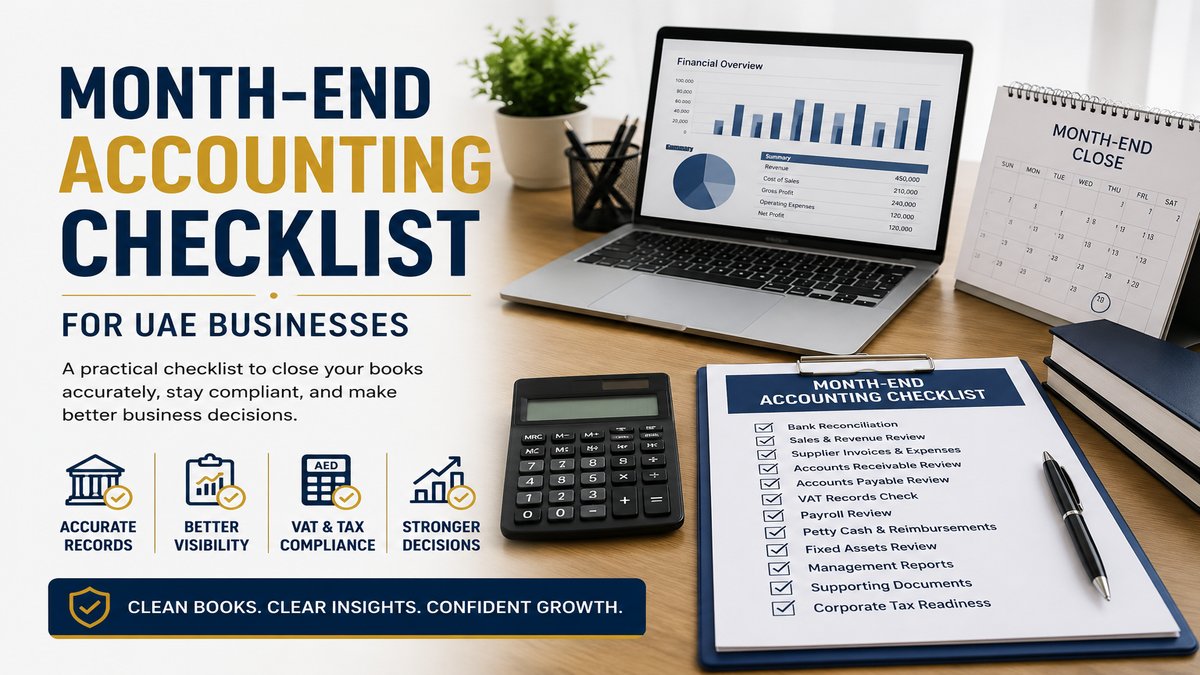
Month-end accounting checklist
A practical month-end accounting checklist should include the following:
Bank reconciliation.
Sales invoice review.
Supplier invoice and expense review.
Separation of business and personal transactions.
Accounts receivable review.
Accounts payable review.
VAT record check.
Payroll and staff cost review.
Petty cash and reimbursement review.
Fixed asset and major purchase review.
Management report preparation.
Supporting document organization.
Corporate tax readiness check.
Management review meeting.
This checklist gives businesses a stronger process for keeping accounts accurate, organized, and useful throughout the year.
Why businesses should not skip month-end accounting
Skipping month-end accounting may save time in the short term, but it often creates more work later. Unreconciled accounts, missing invoices, unclear expenses, unpaid customer balances, and incomplete records become harder to fix as time passes.
A consistent month-end process helps the business stay prepared. It improves financial visibility, supports VAT and corporate tax compliance, reduces year-end cleanup, and gives management better information for decision-making. Good accounting is not only about recording what already happened. It helps the business understand what needs attention next.
Get month-end accounting support in the UAE
A proper month-end close gives your business cleaner records, better reporting, and more confidence in the numbers behind your decisions.
Contact AMCME today to set up a stronger accounting process for your business.