UAE e-invoicing is approaching fast. Learn compliance requirements, deadlines, and how to prepare your business for 2026–2027 while staying audit-ready
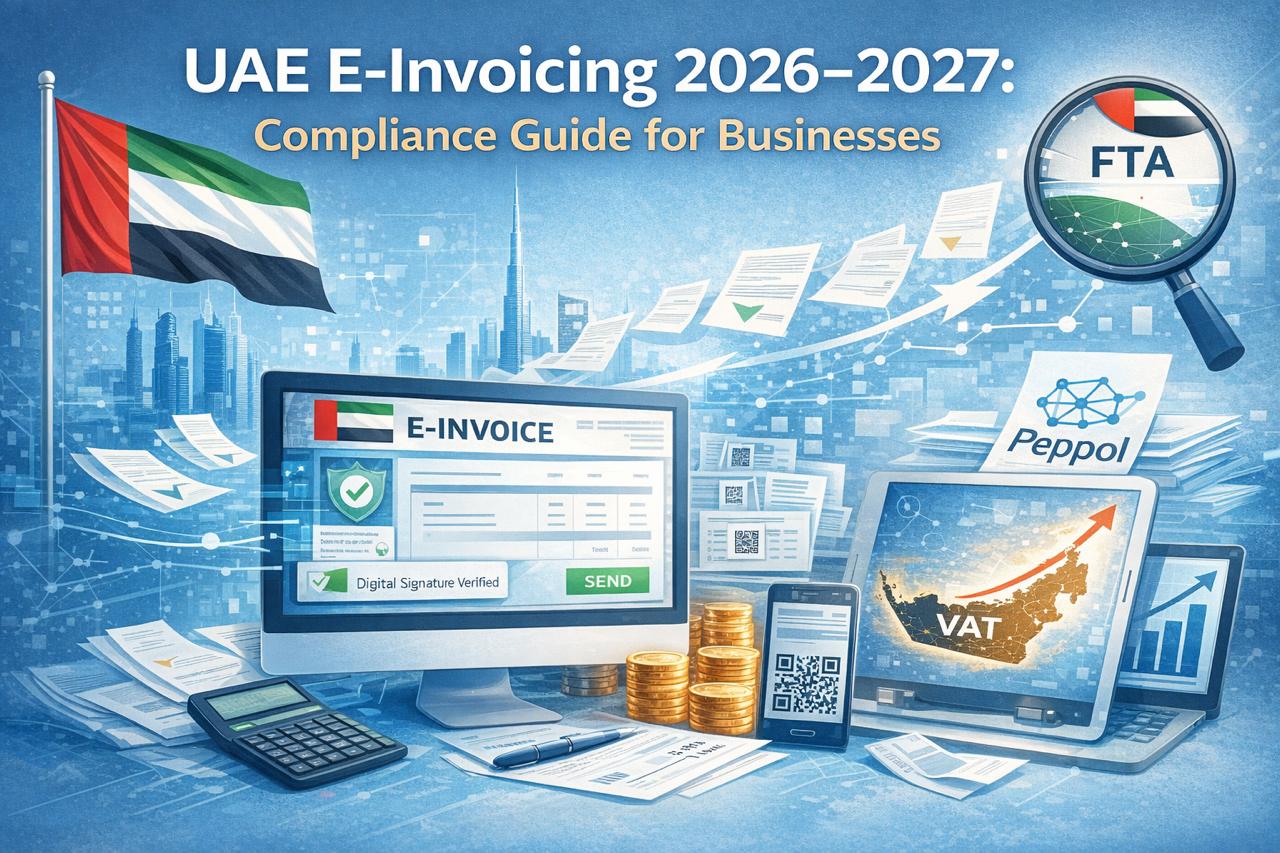
UAE E-Invoicing 2026–2027: Compliance Guide for Businesses
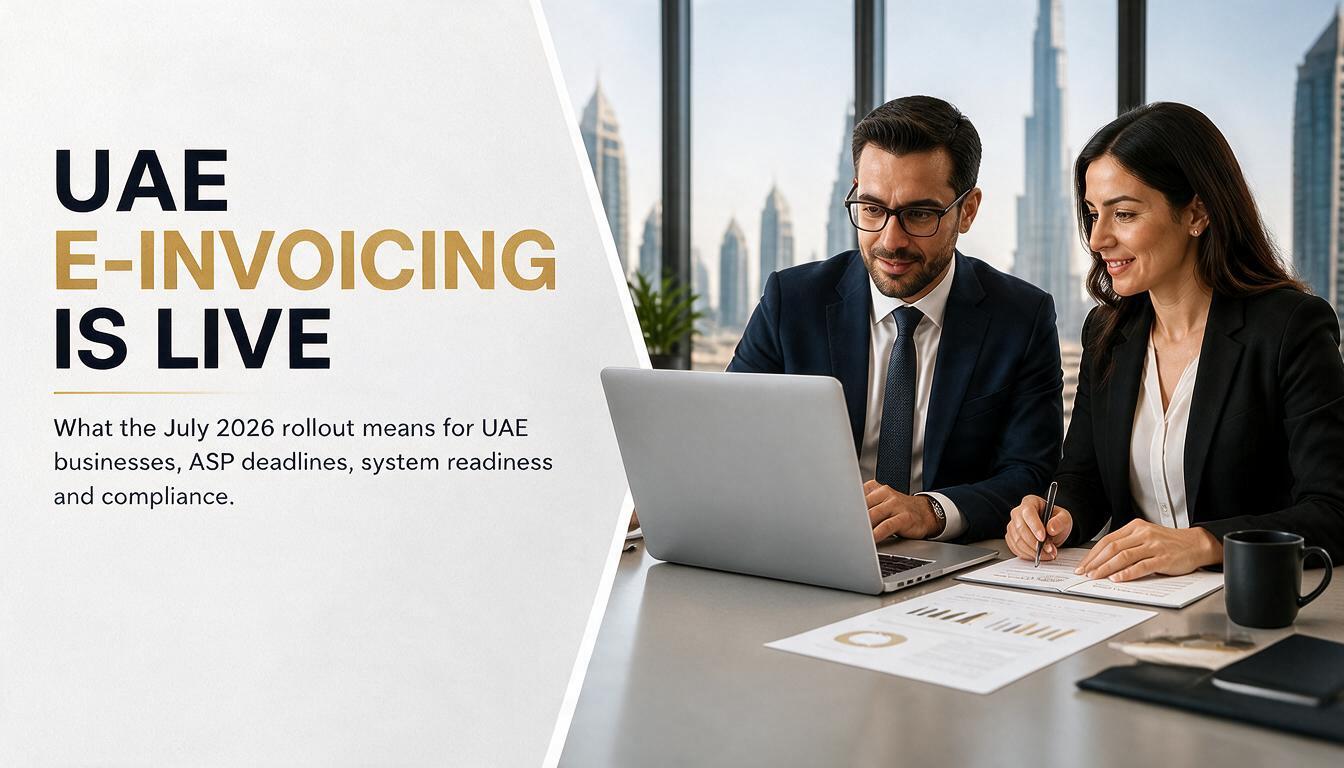
UAE e-invoicing is approaching faster than most businesses expect, and its impact goes far beyond a simple change in invoicing format.
If your current process still relies on PDFs, manual approvals, or disconnected systems, you are not just behind you are exposed. The shift to structured e-invoicing fundamentally changes how transactions are recorded, validated, and monitored by the authorities in real time.
From 2026 onwards, businesses across the UAE will be required to issue invoices through government-approved platforms. These invoices will be validated, digitally signed, and transmitted directly to the Federal Tax Authority (FTA) before reaching the customer.
This removes the margin for error.
For many businesses, the real challenge is not the technology itself. It is understanding what the regulation requires in practice, how it affects accounting workflows, and how to avoid compliance gaps that could trigger FTA scrutiny.
What is UAE E-Invoicing?
UAE e-invoicing goes beyond sending invoices digitally.
Under the new framework, invoices must be generated in a structured electronic format (XML/Peppol) and transmitted through Ministry of Finance-approved Accredited Service Providers (ASPs).
The UAE is adopting a Continuous Transaction Control (CTC) model, meaning:
● Each invoice is validated before it reaches the buyer
● A digital signature is applied
● Invoice data is transmitted to the FTA in real time
This is a key shift. Instead of reporting transactions periodically through VAT returns, businesses will effectively report them as they happen.
Any mismatch between your invoices and VAT filings will be immediately visible.
Who Must Comply with UAE E-Invoicing?
The scope is broader than many expect and primarily applies to B2B and B2G transactions.
This includes:
● Mainland companies
● Free zone entities (if transacting with UAE businesses)
● Sole establishments selling to businesses
● Government entities as buyers
Both VAT-registered and non-VAT-registered businesses may fall within scope. However, the compliance impact is significantly higher for VAT-registered entities, as e-invoice data feeds directly into VAT verification.
Free zone companies should be particularly careful. If your business issues invoices to UAE-based entities, you are likely within scope, regardless of where you are registered.
UAE E-Invoicing Deadlines and Phases
The rollout will take place in phases:
● July 2026: High-revenue businesses
● January 2027: Additional taxable persons (services)
● October 2027: Remaining taxable persons
Exact thresholds are subject to confirmation by the Ministry of Finance.
While this phased approach may seem like extra time, it often creates a false sense of security. Implementation involves system upgrades, ASP integration, internal controls, and testing all of which take longer than expected.
Delaying preparation is one of the most common risks.
What the Law Requires
E-invoicing is backed by UAE legislation, not just administrative guidance.
The framework is based on:
● Federal Decree-Law No. 16 of 2024
● Ministerial Decisions 243 and 244 of 2025
A key requirement is the use of approved Accredited Service Providers (ASPs). Only invoices processed through these providers are considered compliant.
This means:
● PDF invoices alone will not be valid post-deadline
● Non-approved systems create compliance risk
● The FTA will receive structured invoice data in real time
Compliance becomes continuous, not periodic.
How E-Invoicing Affects Your Accounting and Tax Workflows
This is where the real impact is felt.
On the sales side, invoices must pass through validation before reaching customers. This requires your accounting or ERP system to either support structured formats or integrate with an ASP.
On the purchase side, your finance team must ensure incoming invoices are valid before processing or claiming VAT.
The biggest shift, however, is in reporting. VAT returns must align with invoice data already submitted to the FTA. Any discrepancies caused by timing, adjustments, or mapping errors will need to be identified and explained.
For businesses with multiple entities or branches, the complexity increases. Each entity must maintain accurate VAT details, invoice structures, and classifications.
Accredited Service Providers (ASPs): What to Consider
ASPs are central to the UAE e-invoicing system. They validate, sign, and transmit invoices to the FTA.
Choosing the right provider requires more than checking approval status. You should assess whether the ASP can:
● Integrate with your accounting or ERP system
● Handle your transaction types (goods, services, mixed)
● Support credit notes and adjustments
● Provide audit-ready reporting
A poor fit can create ongoing reconciliation issues and operational inefficiencies.
E-Invoicing Preparation Checklist
Preparation should be approached in structured stages rather than as a last-minute task.
Start by confirming your compliance phase and reviewing whether your current accounting system can support structured invoicing. From there, assess integration requirements and begin evaluating approved ASPs.
Once a provider is selected, the focus should shift to data mapping, ensuring that VAT codes, invoice fields, and entity details align correctly. This is followed by designing internal controls, defining approval workflows, and conducting full end-to-end testing.
Finally, businesses should ensure their finance teams are trained and that proper documentation is in place for audit purposes.
The earlier this process begins, the lower the risk at go-live.
Common Mistakes and Compliance Risks
Several issues are already emerging in markets that have adopted similar systems.
The most common include relying on PDF invoices as if they remain compliant, failing to align invoice data with accounting records, and overlooking the importance of internal controls.
Another frequent challenge is underestimating implementation timelines. Integration, testing, and process adjustments often take longer than expected, particularly for businesses with complex structures.
These risks are avoidable, but only with early and structured preparation.
Why AMCME is the Right Partner for UAE E-Invoicing
Many businesses approach e-invoicing as a software implementation. In reality, it is a tax and accounting transformation.
At AMCME, the focus starts with your risk exposure. We assess how your invoicing processes interact with VAT reporting, accounting structures, and internal controls to identify potential gaps before implementation.
We then support:
● Selection of the right ASP
● System integration and data mapping
● Pre-go-live testing and reconciliation
Because once your system is live, the FTA already has your data.
For ongoing support, we assist with VAT alignment, reconciliations, and audit readiness to ensure compliance is maintained, not just achieved.
FAQs
Below are answers to some of the most common questions businesses have about UAE e-invoicing
Who must comply with UAE e-invoicing?
Most UAE businesses involved in B2B or B2G transactions must comply, including mainland companies, free zone entities transacting with UAE businesses, and sole establishments. While both VAT-registered and non-registered entities may fall within scope, the impact is greater for VAT-registered businesses.
What is an Accredited Service Provider (ASP)?
An ASP is a Ministry of Finance-approved provider that validates, signs, and transmits e-invoices to the FTA. Only invoices processed through approved ASPs are considered compliant under the UAE framework.
Can I use my existing accounting software for UAE e-invoicing?
Some accounting systems can integrate with approved ASPs, while others require upgrades or middleware. Businesses should assess their current systems early to confirm compatibility with e-invoicing requirements.
What happens if a business does not comply with UAE e-invoicing?
Non-compliance may result in VAT penalties, invalid invoices, and increased audit risk. Customers may also be unable to claim input VAT on non-compliant invoices, which can affect business relationships.
Are there any exemptions from UAE e-invoicing?
E-invoicing primarily applies to B2B and B2G transactions. However, businesses should review their specific activities carefully, as exemptions are limited and may depend on transaction type.
Conclusion
UAE e-invoicing is not a simple compliance update. It is a shift toward real-time tax reporting that affects how businesses operate at a fundamental level.
The businesses that prepare early will manage this transition smoothly and reduce compliance risk. Those that delay will face tighter timelines, higher pressure, and greater exposure.
Preparation is no longer optional. It is essential.
Need help preparing for UAE e-invoicing?
AMCME offers a tailored e-invoicing readiness assessment covering system gaps, ASP selection, and VAT compliance alignment.
Get in touch with our team to ensure your business is fully prepared before your deadline.